Eye-Hand Coordination Is Not About Reflexes
Watch a crisp passing sequence in soccer, a no-look bounce pass in basketball, a top player lining up a return in tennis, or a hockey goalie tracking a hard snapshot through traffic, and it is easy to assume the secret is pure reflex speed. Blink and the puck or ball is already moving.
In sports, however, waiting purely to react puts you a step behind. The human body takes real time to send signals from the eyes to the brain and out to the muscles. If you wait until a rocket wrist shot or a hard-driven tennis serve reaches halfway down the rink or court before deciding what to do, your save or return will almost always arrive late.
Great eye-hand coordination is less about twitching faster than everyone else and more about reading information early. It is a skill built on timing, pattern recognition, and smart decision-making under pressure.
The Four-Step Information Loop
Every coordinated movement runs on a continuous loop between what you see and what you do:
1. Eyes gather: Vision picks up motion, angles, speed, and body positions across the ice, field, or court.
2. Brain predicts: Your brain compares those incoming clues against past experience to project where the puck, ball, teammate, or opponent is heading next.
3. Hands execute: Motor commands fire to position your hands, blocker, glove, stick, or racket along the predicted path.
4. Feedback corrects: Vision and body awareness track the actual result — like where the puck hits the glove leather or how a defender shifts — so the next move adjusts on the fly.
When people talk about "hand-eye coordination," they often picture step three in isolation. In reality, smooth execution depends on steps one and two happening ahead of time.
How Much of the "Picture" Do You Actually Need?
You rarely need the complete flight path of a puck or ball before starting your motion. Experienced athletes read early body cues and let their brains fill in the rest of the picture.
• Ice hockey & goaltending: A goalie reads the shooter's stick blade angle, torso rotation, and release point — plus any screen in front of the crease — to pick up trajectory and line up the glove, blocker, or pad before the puck even clears the release zone.
• Basketball: A sharp passer or ball-handler often reads a defender's weight shift or hip angle before the defender even commits to a steal or closeout, setting up a pass or pull-up jumper early.
• Tennis: Returners pick up early clues from the server's toss, shoulder turn, and racket drop to guess direction and pace before the ball crosses the net.
• Soccer: Goalkeepers and defenders read a striker's plant foot, body lean, and head angle to anticipate a shot or through-ball a split second earlier.
Acting on partial information is not reckless guessing. It is educated prediction based on reliable movement patterns. When a cue is clear, starting early buys precious time; when a cue is ambiguous or faked, good athletes stay balanced enough to adjust.
Bandwidth: Filtering Noise from Signal
Your eyes capture far more visual detail than your conscious mind can process at once. Crowds, moving jerseys, changing light, glass reflections, and scoreboard movement all compete for attention.
Think of visual attention like bandwidth. If you try to track every detail equally, your brain gets bogged down in noise. Skilled players narrow their focus to high-value signals — like a shooter's blade angle, a ball's spin, or open space near the slot or penalty box — while ignoring distractions that do not change the play.
Training sharpens this filter. Over time, athletes spend less mental energy sorting out clutter and more energy spotting the cues that actually predict what happens next.
Eye-Hand Coordination Is Trainable, Not Fixed
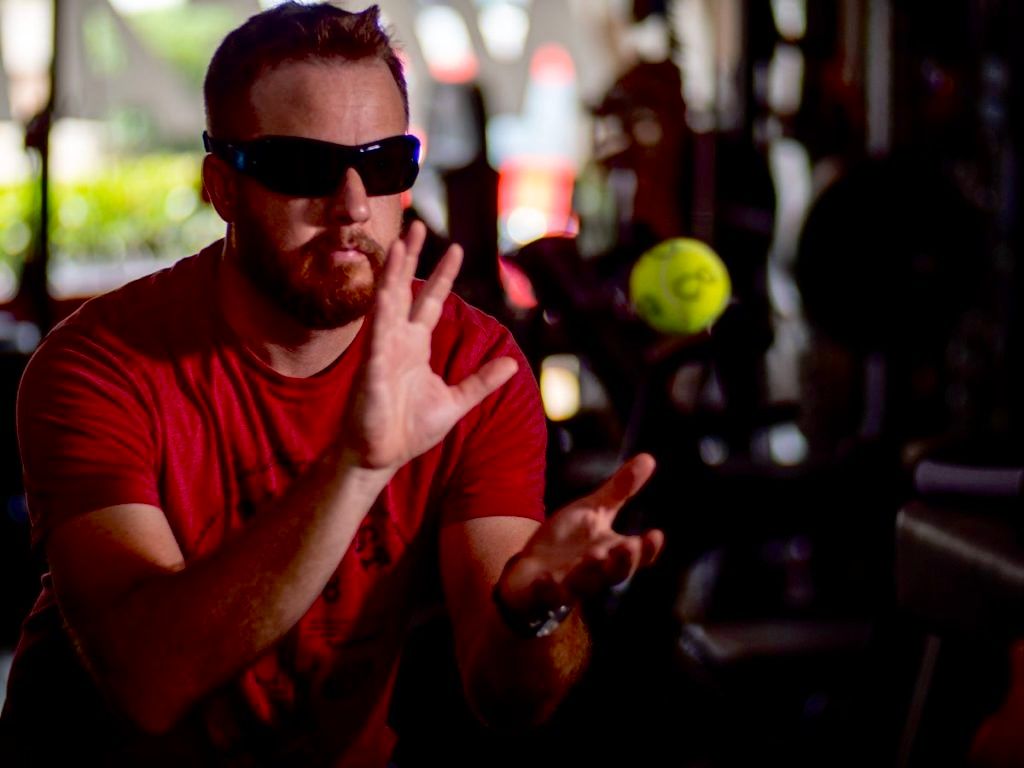
Some athletes look naturally coordinated from day one, which feeds the myth that you either have it or you do not. While genetics play a role in baseline traits, visual-motor skills respond well to targeted practice — especially when drills challenge your timing and focus rather than just physical strength.
Four accessible drills build different parts of this loop:
• Reaction ball: Bouncing a multi-sided rubber ball on a hard surface creates unpredictable angles and hops. It trains your eyes to track sudden direction changes and get your hands in position quickly.
• Wall-ball: Throwing and catching a ball against a wall at varying speeds and angles builds rhythm, tracking accuracy, and quick adjustments — great for goalie hands, basketball hands, or general ball control.
• Juggling: Keeping two or three balls moving in a steady pattern trains peripheral awareness, hand-to-hand timing, and calm focus when multiple objects are in motion.
• Strobe training: Wearing specialized eyewear that intermittently blocks vision forces your brain to rely on early cues and predict motion during brief visual gaps.
Keep sessions short and focused so your eyes and mind stay sharp rather than fatigued.
The research backs this up. A study of 121 athletes across basketball, volleyball, handball, football and combat sports found clear differences in hand-eye coordination and reaction time depending on the sport practiced — with combat sports athletes showing the fastest reaction times and fewest coordination errors. Coordination is shaped by what you train.Read the study here
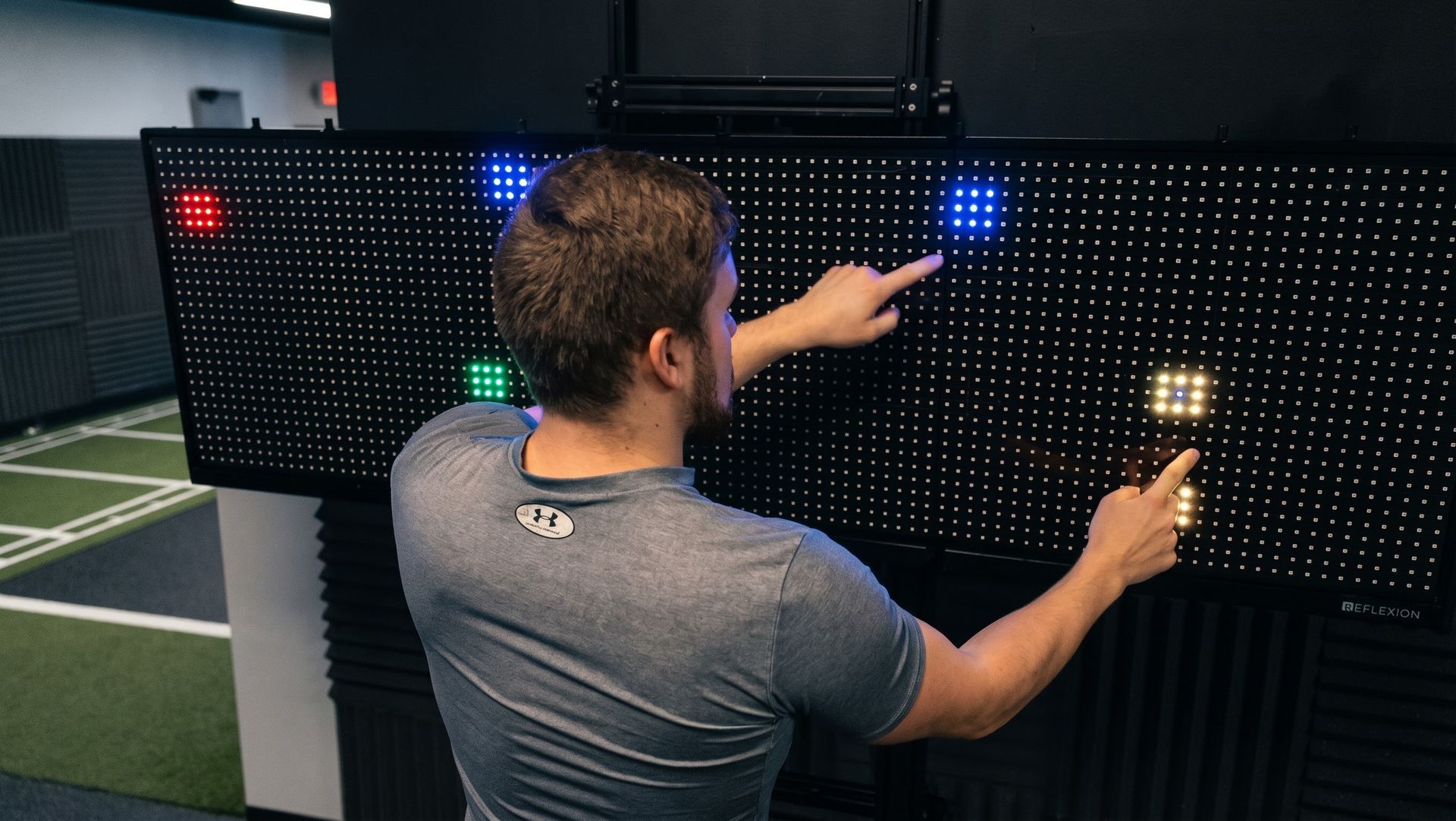
If you have access to tech, go one level up: Devices like Reflexion Edge — a portable touchscreen board where lights flash at random and you strike them as fast as you can — add a layer the classic drills can't. Every hit is timed and tracked, difficulty adapts to your performance, and you have to move your whole body to reach the targets, not just your hands. It trains reaction time, peripheral vision, eye-hand coordination, and decision-making at once, and pro teams have used it as active rest between training blocks to simulate cognitive load under fatigue.
Under Pressure, the Loop Tightens
Coordination looks effortless in practice and gets exposed under pressure. When the stakes rise, breathing shortens, attention narrows, and the brain rushes the prediction step — which is exactly when athletes stop reading cues and start chasing the ball. Good reflexes help, and so does good vision and lighting, but the real edge under pressure is trusting your read and staying balanced enough to adjust. Assess the obstacles in your way — fatigue, poor light, visual clutter, nerves — because you can't filter noise you haven't identified.
Stop Chasing the Ball, Start Reading the Picture
Chasing the puck or ball usually means you are late to the action. Whether you are in the crease, playing weekend tennis, running pickup basketball, or lining up for Sunday-league soccer, better coordination starts before contact — by watching the right clues earlier and trusting your read.
Try This Week
Pick one sport you play or watch this week and focus on one early cue instead of watching only the puck or ball. In hockey, watch the shooter's blade angle and release point; in tennis, watch the server's shoulder and racket drop; in basketball, watch the ball-handler's hips and eyes; in soccer, watch the striker's plant foot. Notice how much calmer and better timed your response feels when you start reading the setup a beat sooner.
Want to know where you stand?
Book a diagnostic assessment at the Vision Motion Lab — Telefonplan, Stockholm.
See. React. Win.