Bilateral Asymmetry (L/R)
Compare left- and right-side performance to identify differences in response speed.
40 ms
ILLUSTRATIVE SIDE-TO-SIDE DIFFERENCE
A data-driven cognitive performance training system designed to assess how athletes see, process information, make decisions and respond under pressure.
BOOK YOUR REFLEXION EDGE DEMOPerformance is not just about reacting quickly. It is about detecting relevant information, tracking movement, prioritising what matters and selecting the right response. Reflexion Edge provides measurable data to help identify individual strengths and areas for development.
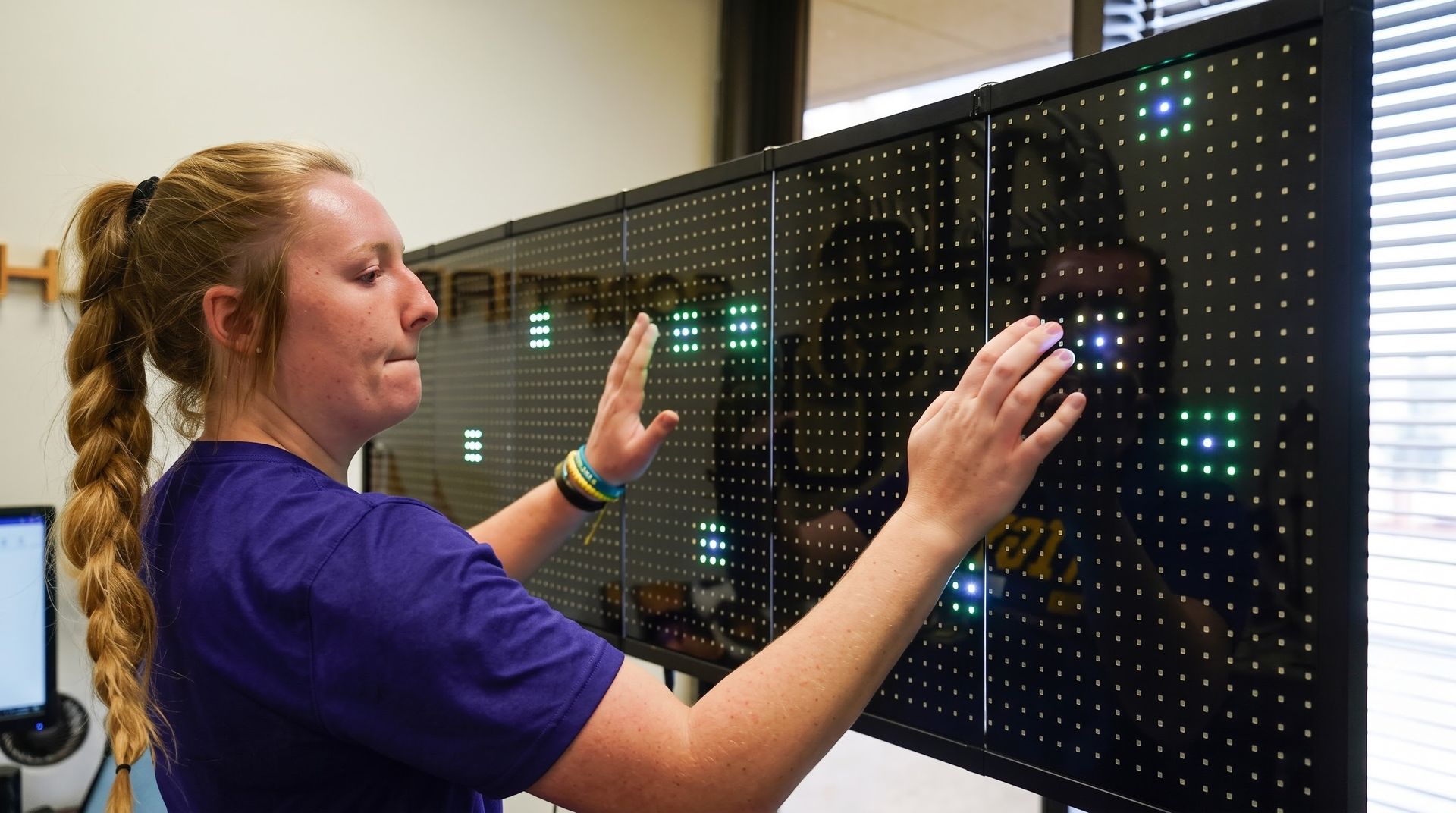
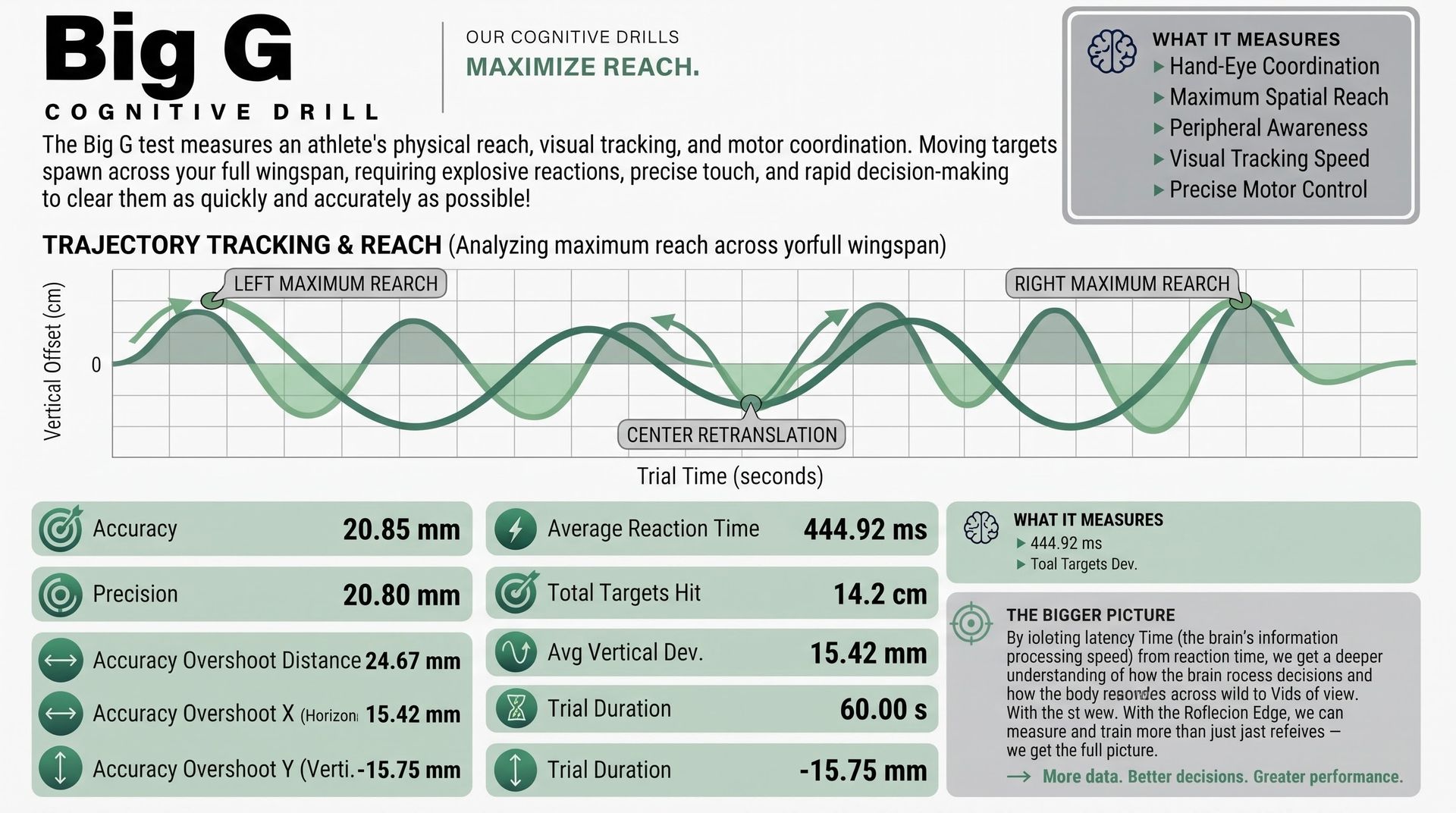
Six measurements that help reveal how an athlete detects, processes and responds to visual information.
Compare left- and right-side performance to identify differences in response speed.
Measure horizontal and vertical distance between the target and the athlete's touch.
Measure the time between a visual stimulus and the athlete's response.
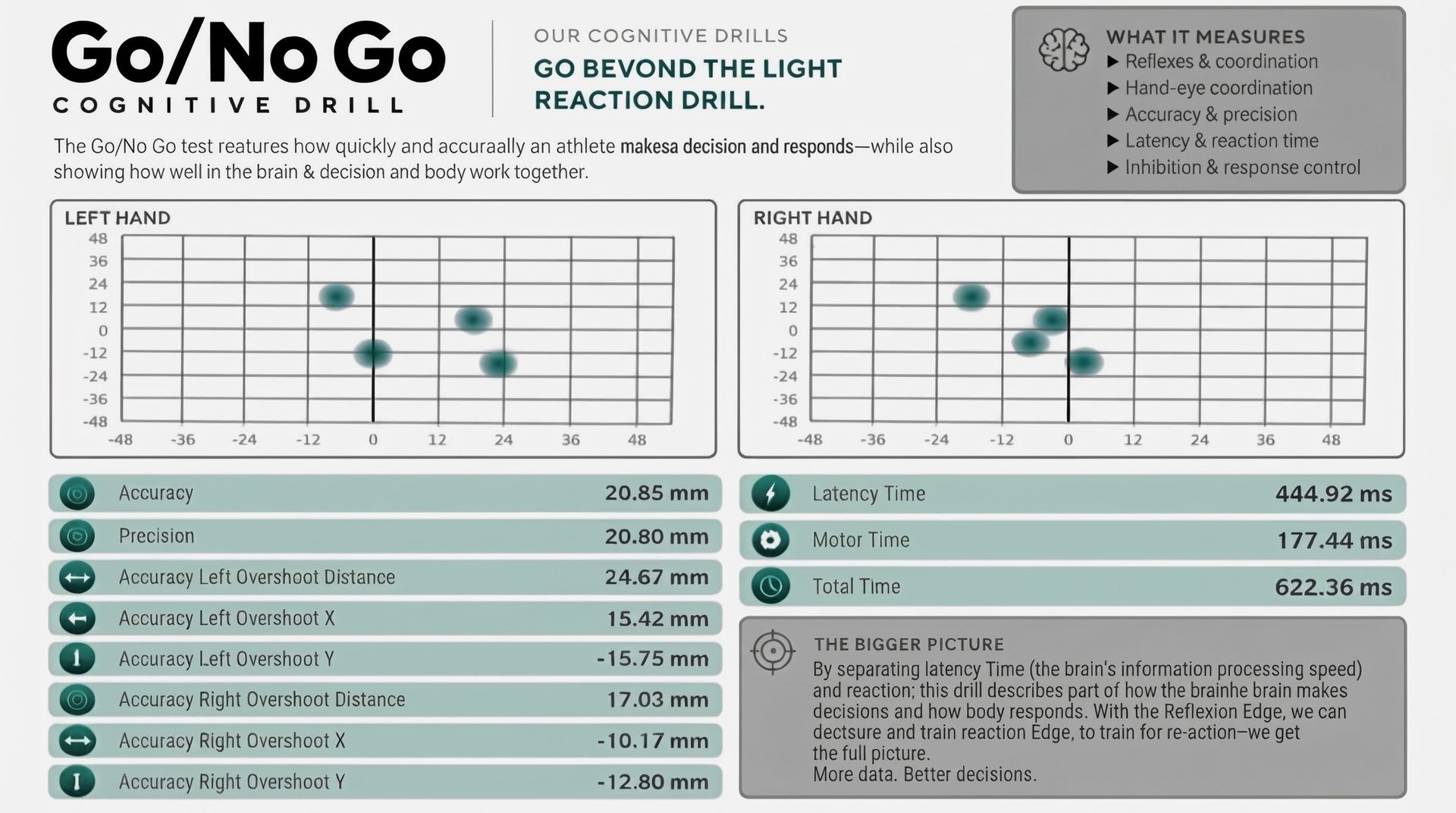
Respond to the correct signal and withhold the response when required.
Follow moving targets while maintaining visual attention and accuracy.
Measure the percentage of responses that correctly match the task demands.
A visual example of how five cognitive-visual performance areas can be represented and monitored over time.
Five measured areas · Illustrative profile
Explore how different visual-cognitive demands relate to the challenges athletes face in sport.
Challenge visual search and reach selection across a wider working area. The athlete must locate relevant targets, organise the response and reach accurately while maintaining control of body position.
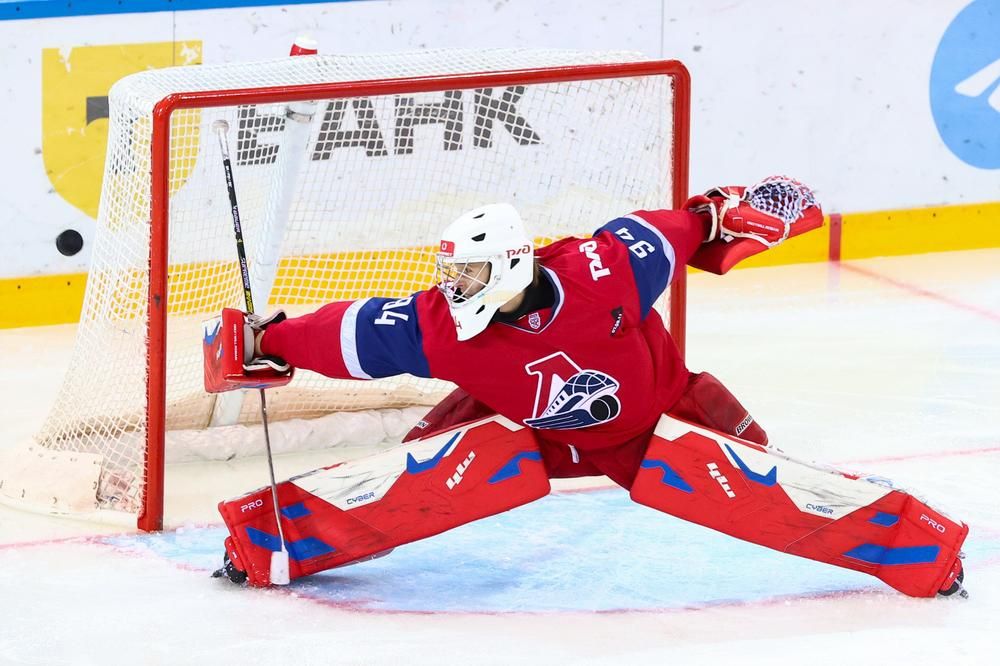
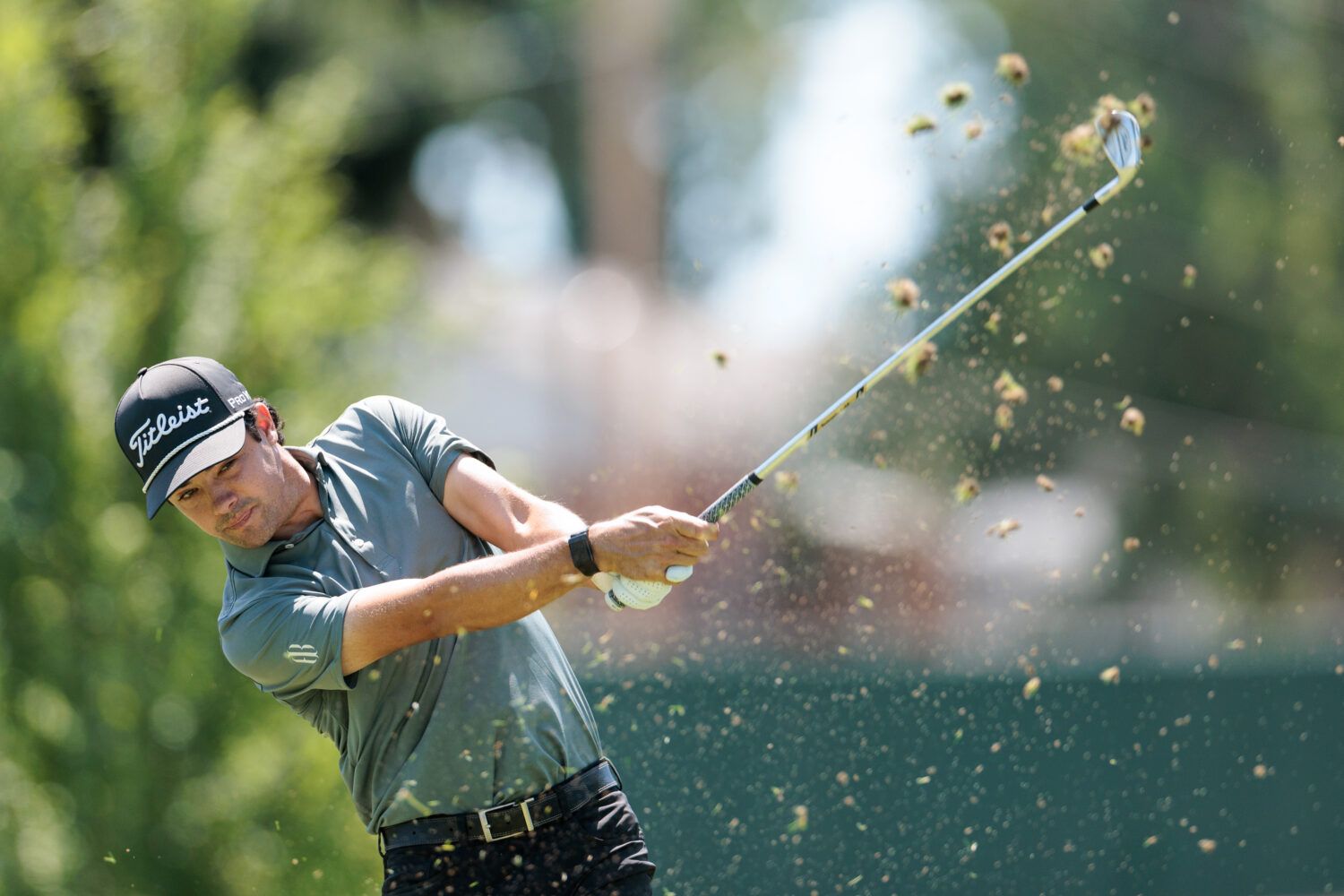
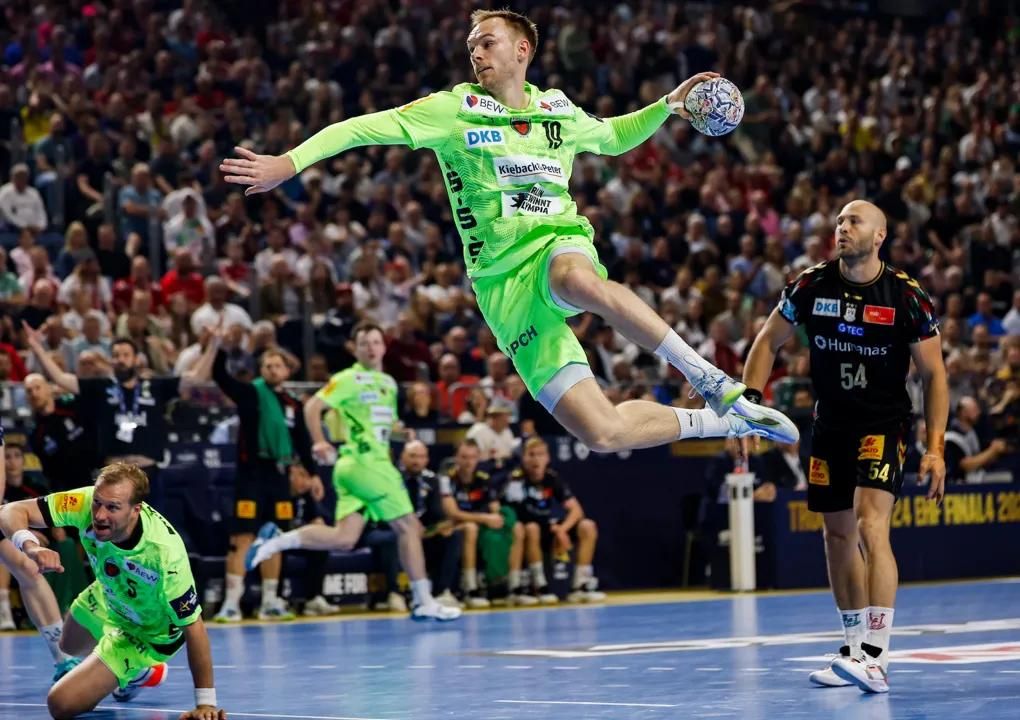
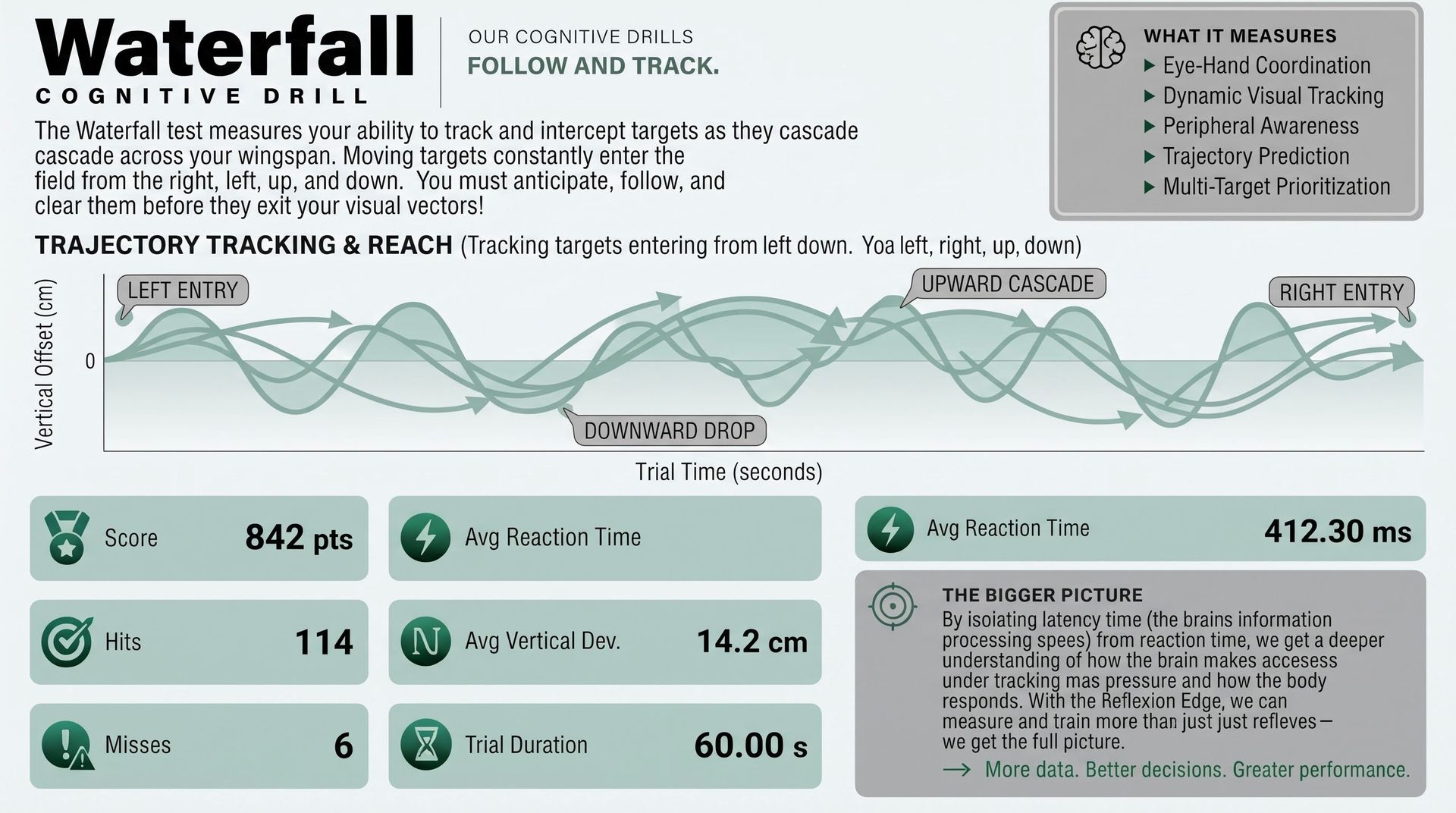
Challenge the ability to follow a moving visual sequence and maintain attention to the relevant target. The task emphasises visual tracking, sustained focus and accurate responses as the pattern develops.
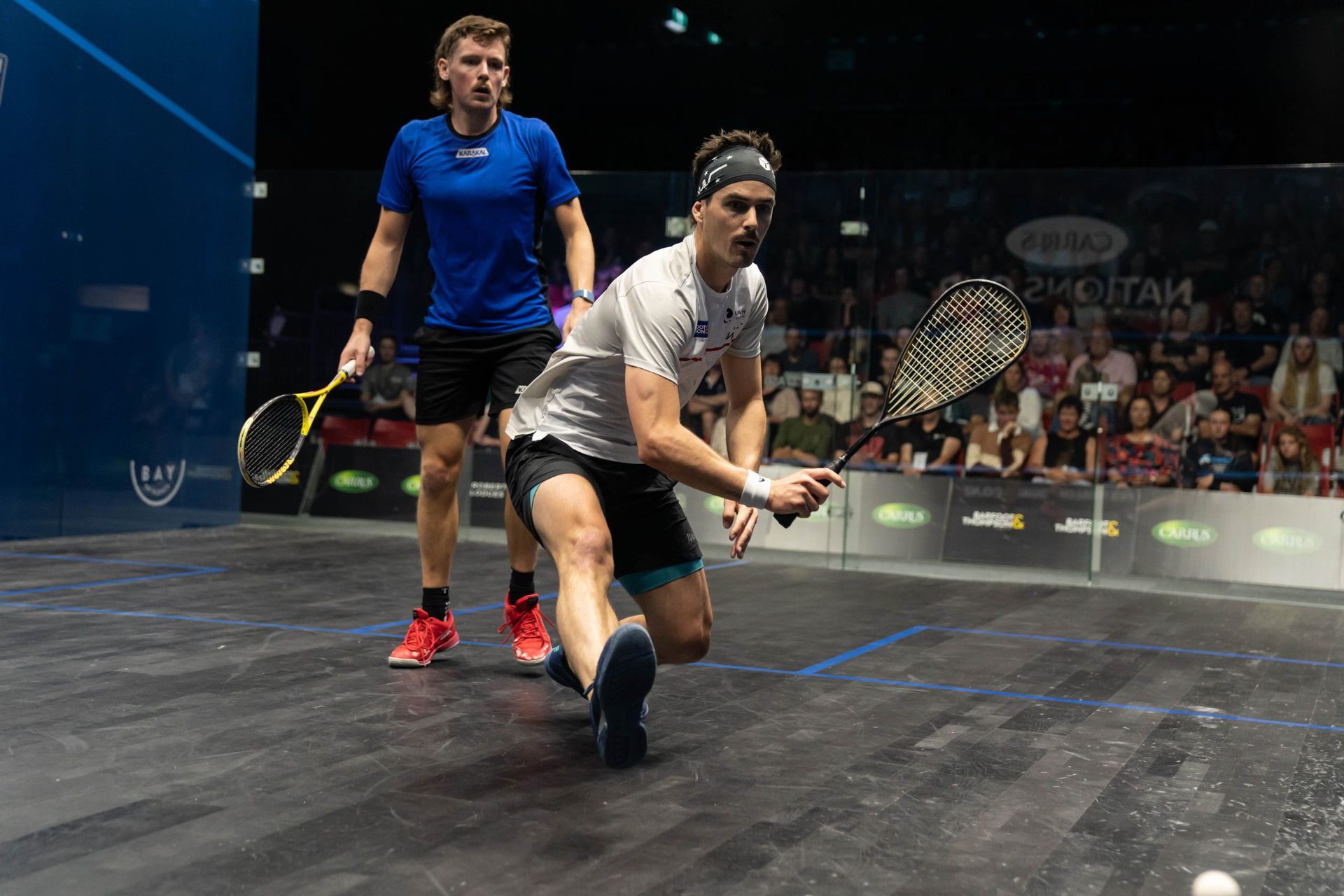
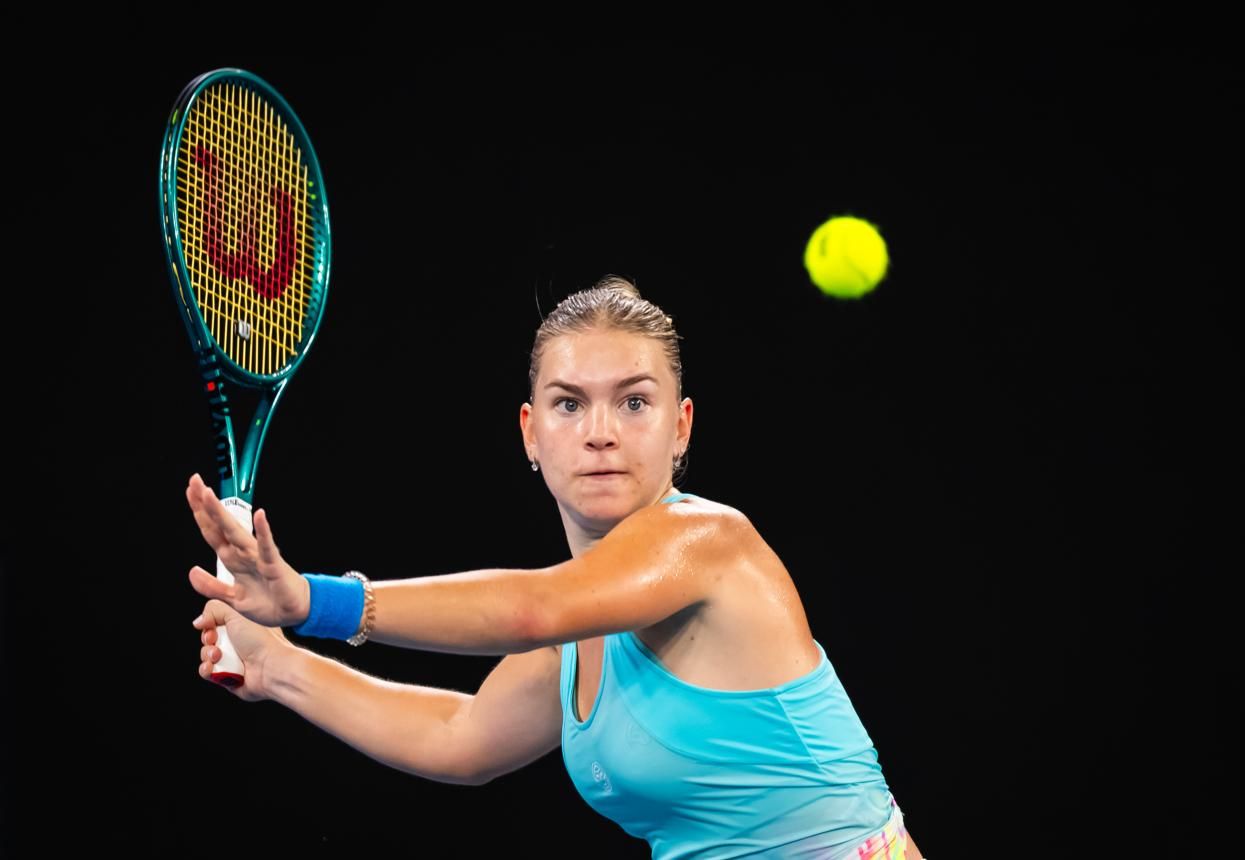
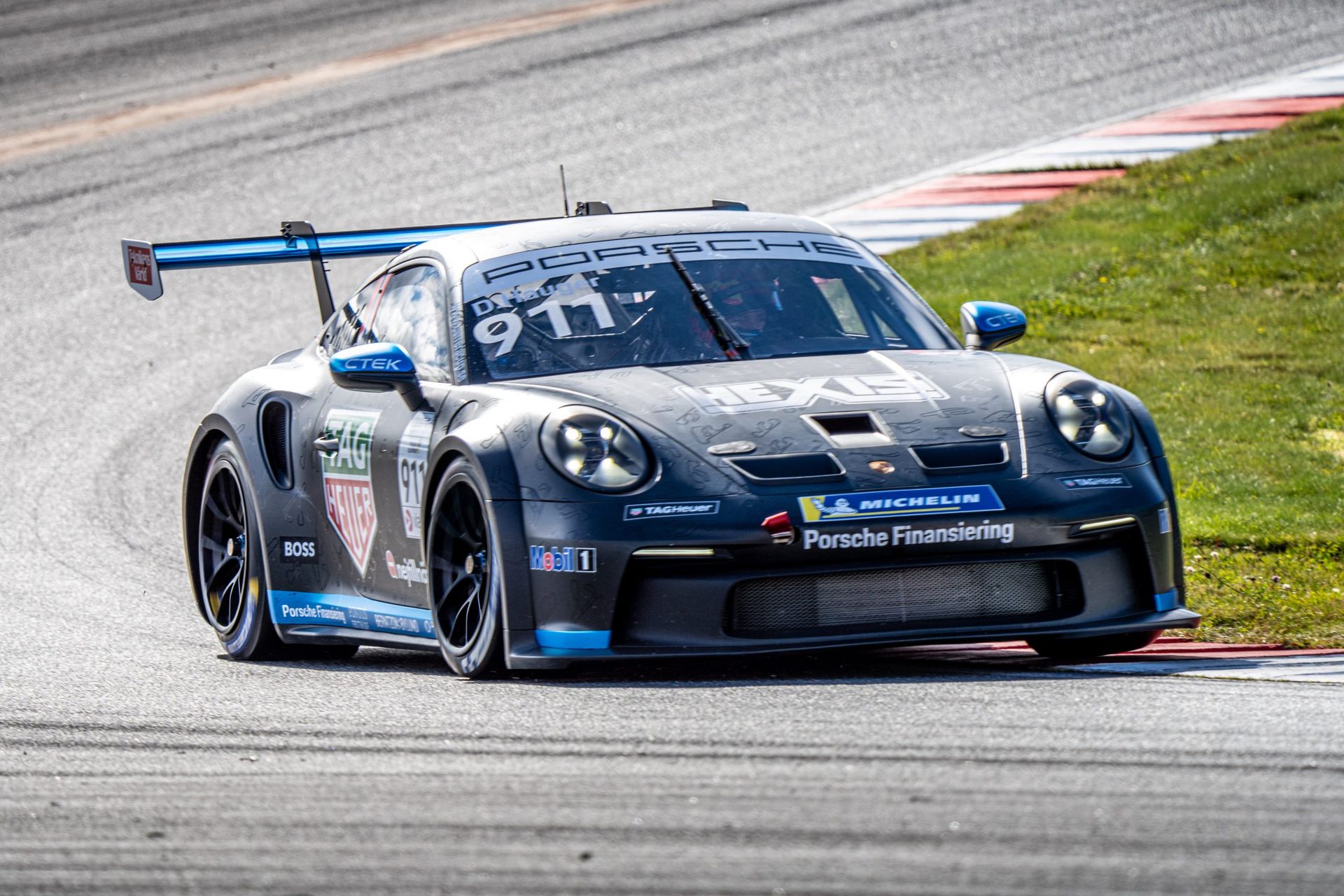
Challenge visual scanning and the ability to explore a busy visual field. The athlete must identify relevant information, shift attention between targets and select an appropriate response while avoiding irrelevant cues.
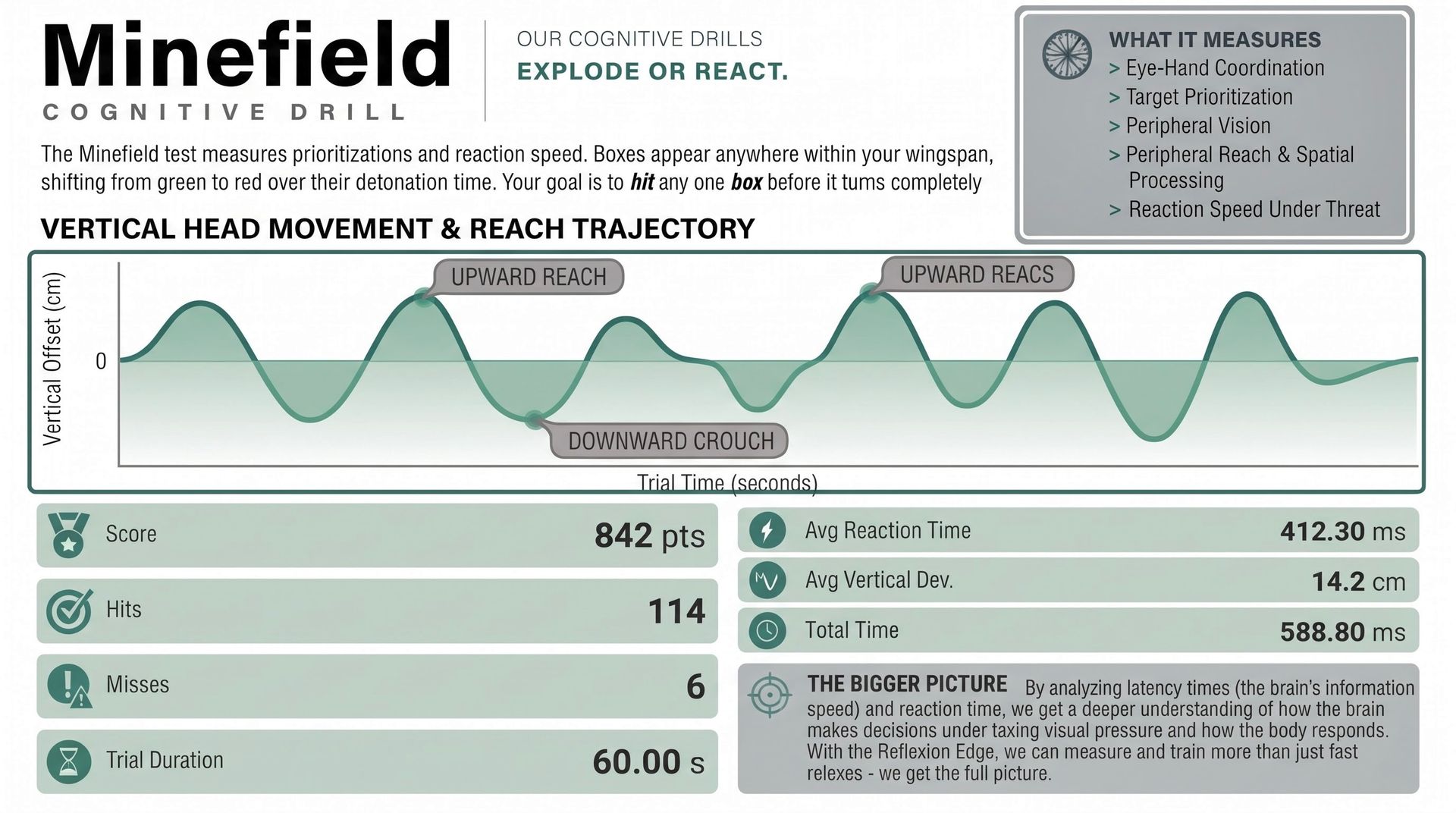
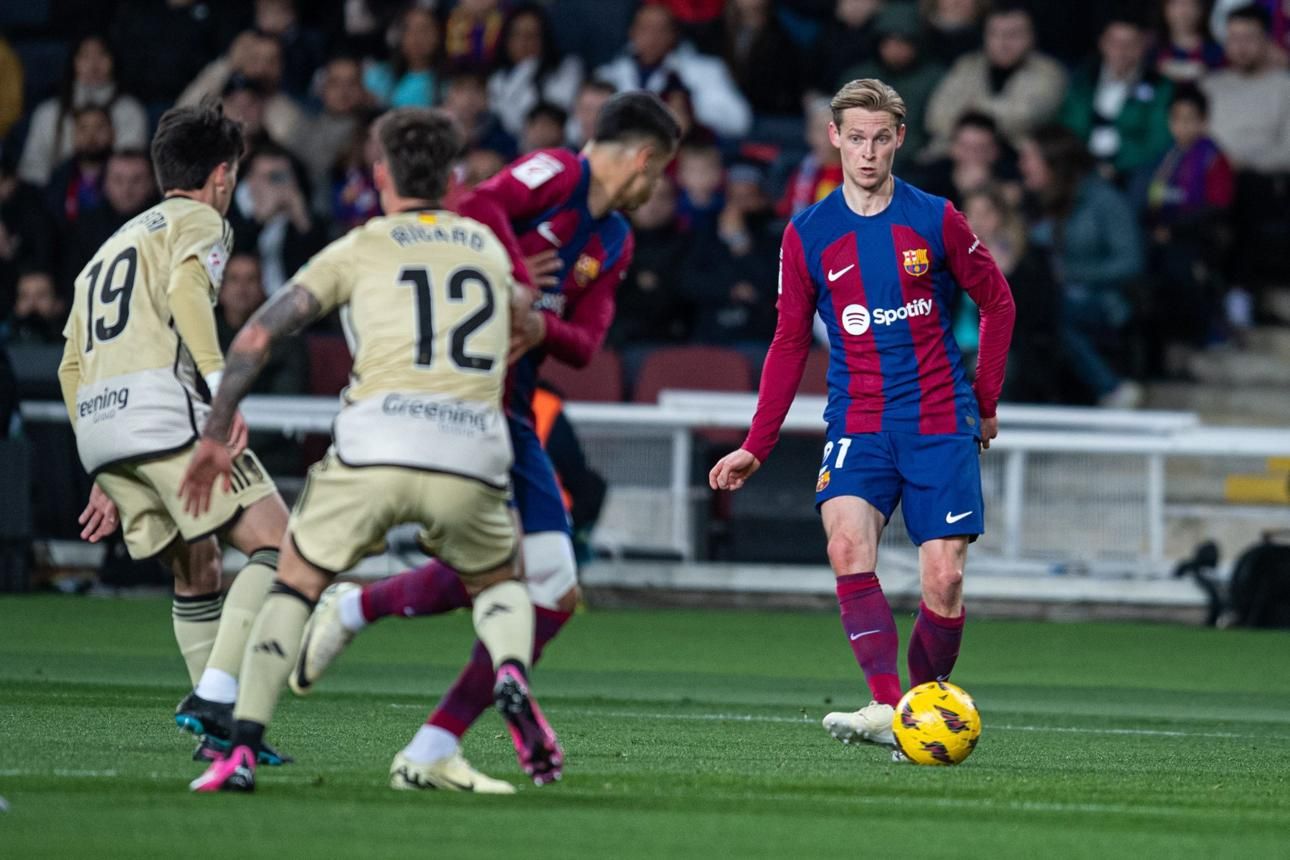
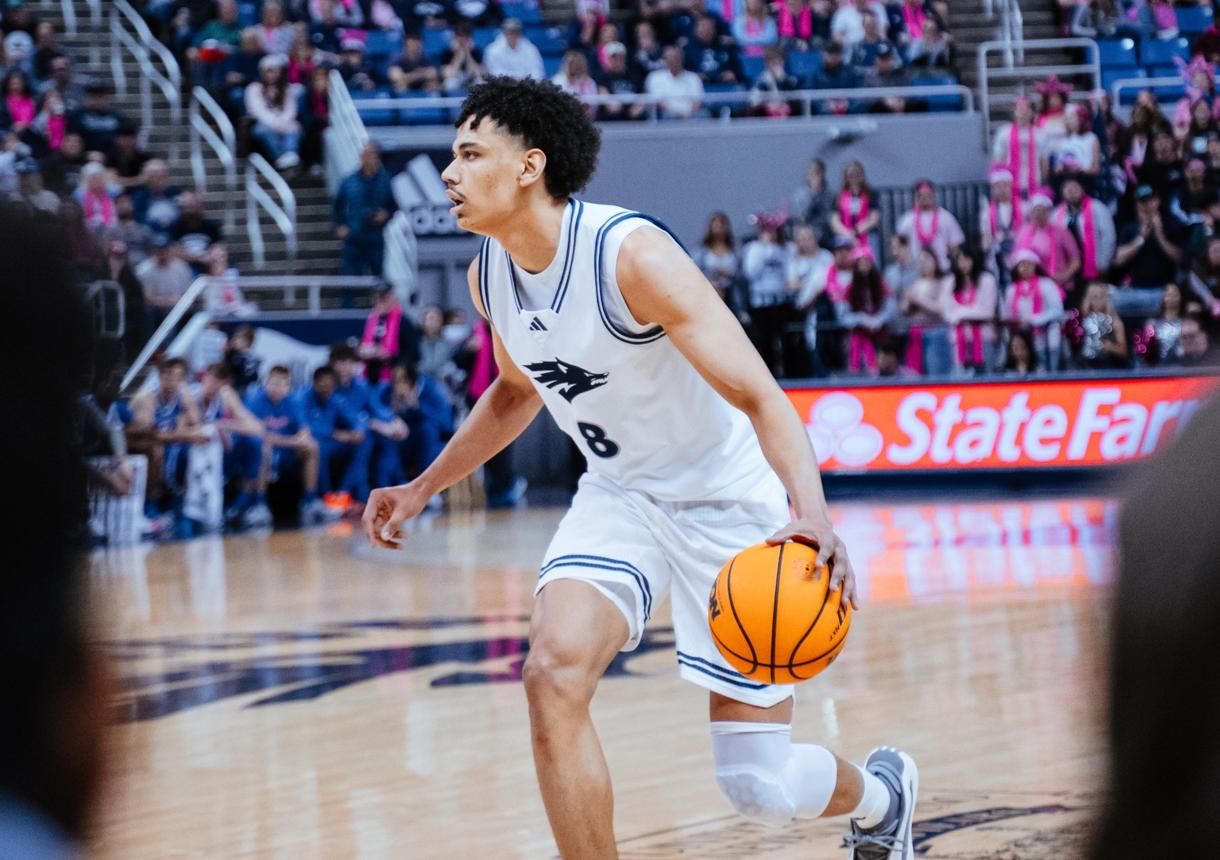
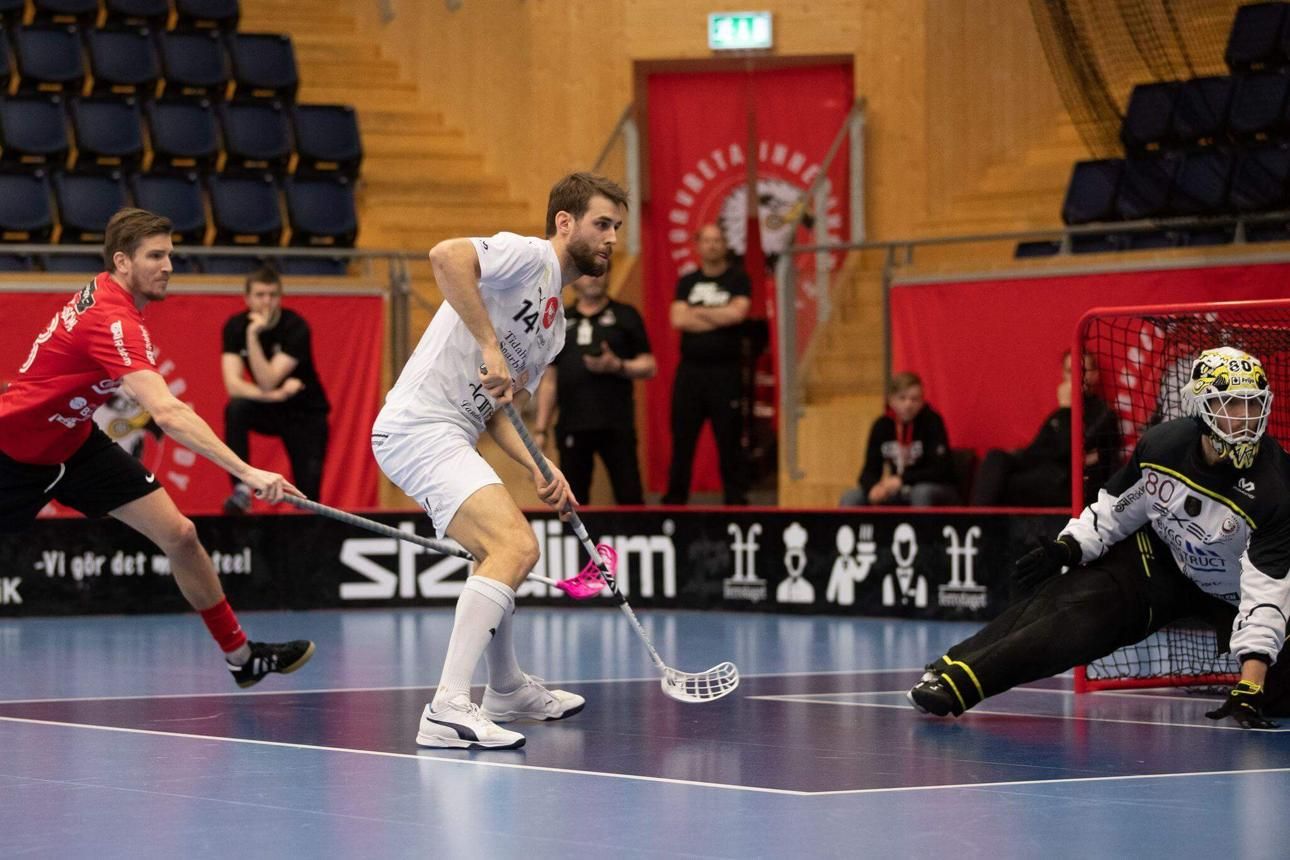
Challenge response selection and inhibitory control. The athlete must respond when the correct target or signal appears and withhold the response when the signal indicates NO-GO. It is not simply about reacting faster; it is about choosing when to act and when not to act.
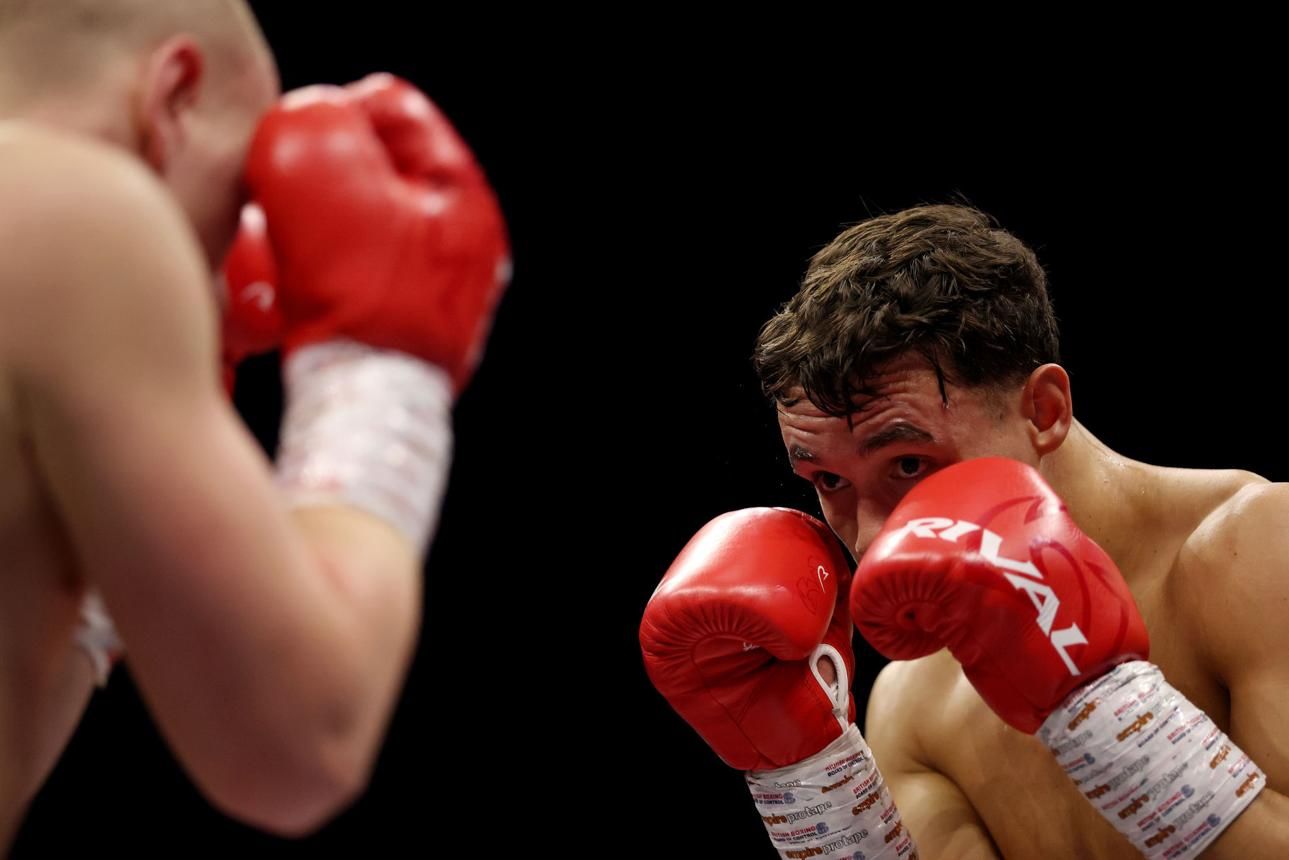
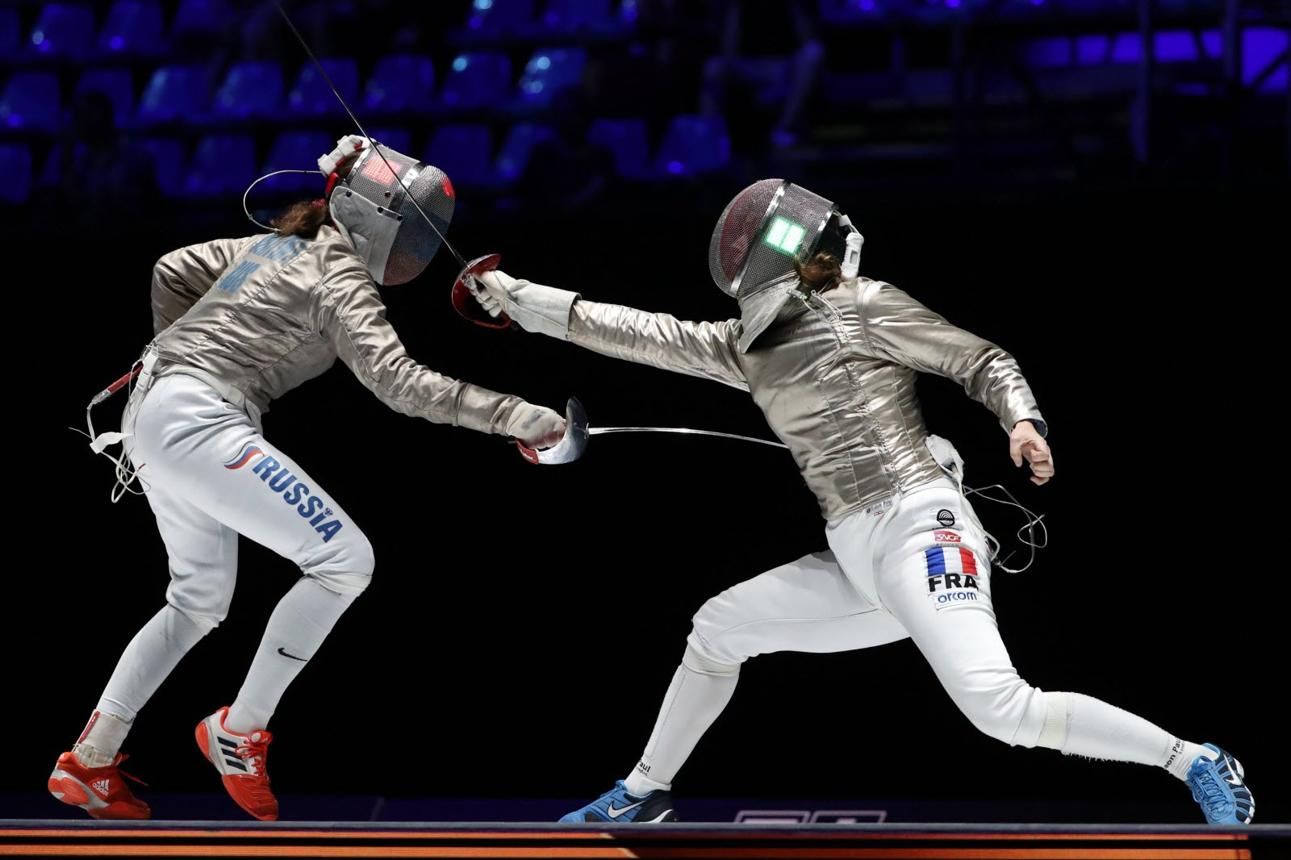
Start with an assessment. Identify individual strengths and limitations. Build a training strategy around what the data reveals.
This website uses cookies. Read our Integritetspolicy.